How Can Businesses Scale Performance Marketing Campaigns?
Scaling a business requires more than increasing advertising budgets. It involves reaching the right audience, improving conversion rates, optimizing acquisition costs, and generating sustainable revenue. Performance marketing services help businesses achieve these goals through measurable campaigns, data-driven decisions, and continuous optimization.
Whether you operate a D2C brand, an ecommerce store, or a growing B2B business, scaling paid campaigns requires a structured approach. Instead of spending more money across advertising platforms without a clear direction, businesses need a strategy that connects marketing investments with measurable outcomes.
In this guide, we will explore how businesses can scale their marketing campaigns, improve return on ad spend (ROAS), acquire more customers, and build a sustainable growth strategy.
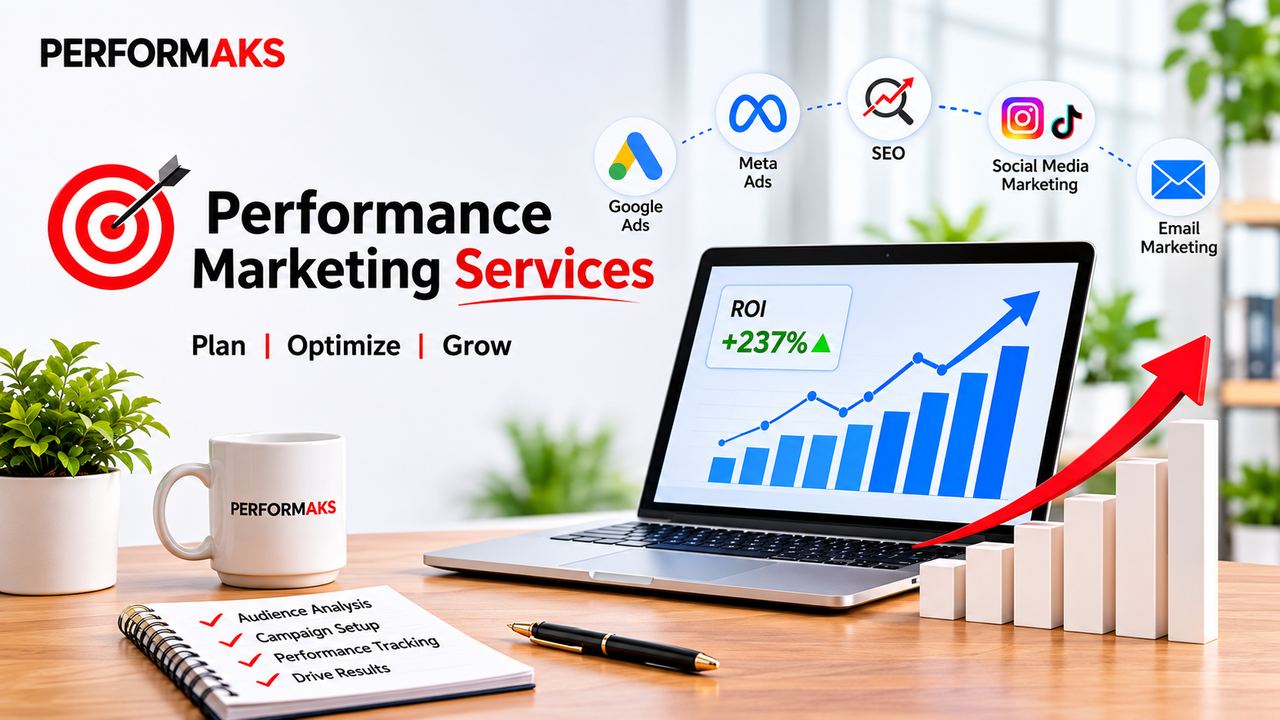
What Does Scaling Performance Marketing Campaigns Mean?
Scaling performance marketing campaigns means increasing advertising reach, conversions, and revenue while maintaining acceptable acquisition costs and profitability.
It is not simply about increasing your daily advertising budget. A campaign that generates profitable results with a small investment may not deliver the same results when the budget increases.
For example, an ecommerce brand generating 100 monthly orders through paid advertising may want to increase that number to 500. Achieving this requires improvements across several areas, including audience targeting, creative performance, landing page experience, and conversion optimization.
A successful scaling strategy focuses on:
- Increasing qualified traffic and customer acquisition.
- Maintaining or improving return on advertising spend.
- Reducing customer acquisition costs (CAC).
- Expanding into new audience segments and markets.
- Improving conversion rates across the marketing funnel.
- Increasing customer lifetime value (CLV).
The objective is to achieve sustainable growth rather than short-term increases in advertising expenditure.
How Can Performance Marketing Services Help Businesses Scale?
A structured marketing approach helps businesses identify growth opportunities, allocate budgets effectively, and improve campaign performance. Here are the key strategies businesses should consider.
1. Build a Data-Driven Performance Marketing Strategy
Before increasing advertising expenditure, businesses should understand which campaigns, channels, and customer segments generate the highest returns.
A data-driven strategy uses historical campaign performance, customer behavior, conversion data, and revenue metrics to guide marketing decisions.
Start by analyzing:
- Which advertising channels generate the most conversions?
- Which campaigns deliver the lowest customer acquisition costs?
- Which audience segments produce higher revenue?
- Which products or services generate the highest profit margins?
- Where are potential customers dropping off in the conversion funnel?
These insights help businesses identify underperforming campaigns and prioritize profitable opportunities.
Instead of relying on assumptions, marketers can use measurable data to decide where additional investment is likely to generate better results.
2. Expand Advertising Channels Strategically
Depending on a single advertising platform can limit business growth. Expanding into additional channels allows brands to reach potential customers at different stages of their buying journey.
However, businesses should select channels based on their target audience, products, and marketing objectives.
Some important performance marketing channels include:
- Google Ads: Search campaigns help businesses reach users actively searching for specific products or services. Shopping and Performance Max campaigns can support ecommerce product discovery and sales.
- Meta Ads: Facebook and Instagram advertising help brands generate demand, reach relevant audiences, promote products, and run retargeting campaigns.
- YouTube Advertising: Video campaigns help businesses build awareness, communicate product benefits, and influence purchasing decisions.
- LinkedIn Ads: Suitable for B2B businesses looking to reach decision-makers, generate qualified leads, and promote professional services.
- TikTok and Pinterest Ads: These platforms can help suitable consumer brands expand product discovery and reach new audiences.
The key is to test additional channels gradually, evaluate their contribution, and increase investment in those delivering profitable results.
3. Optimize Campaigns Before Increasing Budgets
One of the biggest mistakes businesses make is increasing advertising budgets without identifying campaign inefficiencies.
Before scaling, review existing campaigns to understand what is working and what needs improvement.
Focus on the following optimization activities:
- Pause advertisements consistently generating poor-quality traffic.
- Improve targeting based on actual customer conversion data.
- Test different ad creatives, headlines, and calls to action.
- Review keyword performance and search terms in Google Ads.
- Improve landing page relevance and loading speed.
- Analyze campaign frequency and audience fatigue.
Regular optimization helps businesses make better use of their existing advertising budgets.
Once campaigns demonstrate consistent performance, budgets can be increased gradually while monitoring changes in acquisition costs and profitability.
4. Improve Landing Page Conversion Rates
Generating more website traffic does not automatically result in more sales. If visitors cannot understand your offering or complete the purchasing process easily, additional advertising expenditure may produce disappointing results.
Conversion rate optimization (CRO) helps businesses turn a higher percentage of existing visitors into customers or qualified leads.
Important landing page improvements include:
- Create clear and benefit-focused headlines.
- Highlight product or service advantages.
- Add genuine customer testimonials and reviews.
- Use prominent and relevant calls to action.
- Simplify forms and checkout processes.
- Optimize pages for mobile devices.
- Improve page loading speed.
For ecommerce brands, product descriptions, product images, pricing information, delivery details, and return policies can significantly influence purchase decisions.
Improving conversion rates allows businesses to generate more results from their existing traffic before investing heavily in acquiring additional visitors.
5. Use Retargeting to Recover Lost Conversions
Not every visitor makes a purchase during their first interaction with a business. Some users browse products, compare prices, explore services, or abandon their shopping carts.
Retargeting helps businesses reconnect with these potential customers through relevant advertisements.
For example, an ecommerce brand can create separate retargeting audiences for:
- Website visitors who did not purchase.
- Users who viewed specific product categories.
- Customers who abandoned their shopping carts.
- Visitors who engaged with previous advertisements.
- Previous customers who may purchase again.
Personalized advertisements, product recommendations, limited-time offers, and relevant messaging can encourage users to return and complete their purchases.
However, businesses should manage advertising frequency and exclude recent purchasers from campaigns where repeat exposure is unnecessary.
6. Make Creative Testing a Continuous Process
Ad creatives influence how audiences respond to advertising campaigns. Even well-targeted campaigns can experience declining performance when advertisements become repetitive or lose audience interest.
Businesses should regularly test different creative approaches instead of relying on a single advertisement.
Consider testing:
- Product demonstration videos.
- Customer testimonials and user-generated content.
- Problem-and-solution creatives.
- Product comparison advertisements.
- Educational and informative content.
- Different headlines, hooks, and calls to action.
Measure each creative based on meaningful performance indicators, such as click-through rate (CTR), conversion rate, cost per acquisition, and revenue.
Creative testing helps identify which messages connect with potential customers and provides opportunities to improve campaign performance.
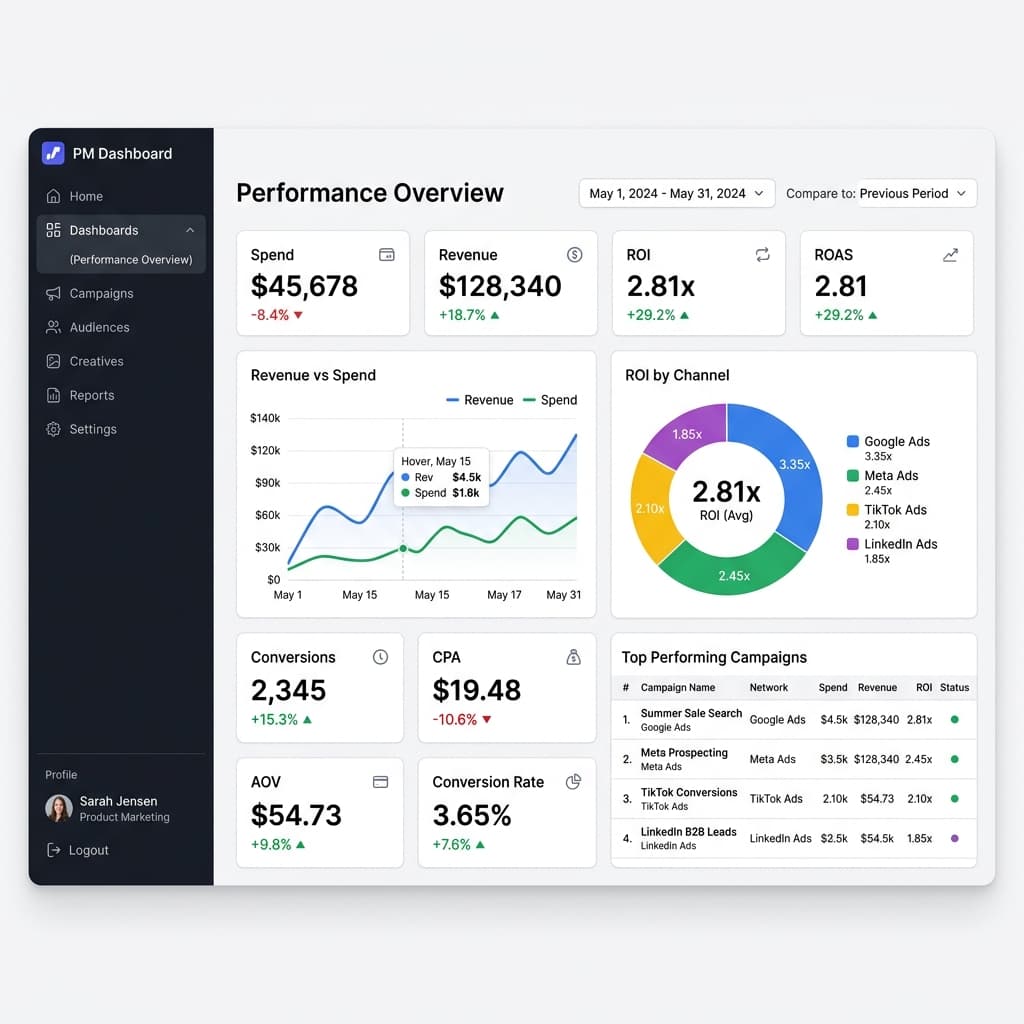
7. Track the Right Performance Marketing Metrics
Scaling without accurate measurement can lead to inefficient budget allocation and misleading growth reports.
Businesses should monitor metrics that reflect both marketing performance and commercial outcomes.
| Metric | What It Measures |
|---|---|
| ROAS | Revenue generated relative to advertising expenditure |
| CAC | Cost of acquiring a new customer |
| CPA | Cost of generating a specific conversion or action |
| CTR | Percentage of impressions resulting in clicks |
| Conversion Rate | Percentage of visitors completing a desired action |
| CLV | Estimated revenue generated by a customer over their relationship with the business |
| AOV | Average revenue generated per order |
For example, a campaign generating a high ROAS may still be unprofitable if product costs, shipping, discounts, and other operating expenses are substantial.
Therefore, businesses should evaluate advertising metrics alongside contribution margins, customer retention, and overall profitability.
Common Mistakes to Avoid When Scaling Marketing Campaigns
Even successful advertising campaigns can struggle when businesses expand without proper planning.
Avoid these common mistakes:
- Increasing budgets too quickly: Sudden budget changes can affect campaign stability and performance.
- Ignoring profitability: High revenue does not necessarily mean high profit.
- Depending on one channel: Overreliance on a single platform increases business risk.
- Neglecting landing pages: Poor user experiences can reduce conversions despite strong advertising campaigns.
- Ignoring tracking issues: Inaccurate conversion data leads to unreliable optimization decisions.
- Stopping creative testing: Repetitive advertisements can contribute to creative fatigue.
- Focusing only on new customers: Ignoring retention opportunities can increase long-term acquisition costs.
A balanced approach helps businesses scale while maintaining control over marketing expenditure and business performance.
When Should a Business Scale Its Performance Marketing Campaigns?
Businesses should consider scaling when their existing campaigns demonstrate consistent and measurable results.
Before increasing investment, evaluate whether:
- Campaigns are generating consistent conversions.
- Customer acquisition costs are within acceptable limits.
- Conversion tracking is properly configured.
- Landing pages are optimized for the target audience.
- Advertising creatives are generating meaningful engagement.
- Revenue and profitability support additional investment.
- The business has sufficient inventory, operational capacity, or service delivery resources.
Scaling should be based on business readiness and reliable performance data rather than the desire to increase traffic or advertising reach alone.
Final Thoughts: Build Sustainable Growth With Performance Marketing
Scaling marketing campaigns successfully requires a combination of strategic planning, continuous testing, accurate measurement, and conversion optimization. Businesses that focus only on increasing advertising budgets may experience higher costs without achieving sustainable revenue growth.
By expanding advertising channels, improving landing pages, testing creative formats, implementing retargeting, and tracking meaningful business metrics, brands can build campaigns that support long-term growth.
At Performaks, we help businesses approach growth through data-driven strategies, performance-focused campaigns, and continuous optimization. The goal is not simply to generate more clicks or impressions but to turn marketing investments into measurable business outcomes.
Ready to Scale Your Campaigns Profitably?
Partner with PERFORMAKS for data-driven paid media, conversion optimization and continuous testing built for sustainable growth.
Book Your Growth Consultation- #PerformanceMarketing
- #ScalingCampaigns
- #ROAS
- #D2C
- #EcommerceMarketing
- #CRO